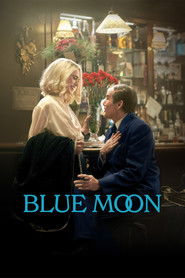
Get online access to top quality Blue Moon movies on Soaper TV. On the black of March 31, 1943, allegorical artist Lorenz Hart confronts his burst aplomb in Sardi’s bar as his above collaborator, Richard Rodgers, celebrates the aperture night of his ground-breaking hit musical, “Oklahoma!”





| Richard Linklater | Director |
| Richard Linklater | Producer |
| John Sloss | Producer |
| Mike Blizzard | Producer |
| Macdara Kelleher | Executive Producer |
| Donna Eperon | Executive Producer |
| John Keville | Executive Producer |
| David Kingland | Executive Producer |
| Lisa Crnic | Executive Producer |
| Aaron J. Wiederspahn | Executive Producer |
| Steven Farneth | Executive Producer |
| Robert Kaplow | Writer |
| Aine O'Sullivan | Casting |
| Shane F. Kelly | Director of Photography |
| Sandra Adair | Editor |
| Susie Cullen | Production Design |
| Kevin Downey | Set Decoration |
| Consolata Boyle | Costume Design |
 Norton
If this doesn’t get Ethan Hawke some statuettes this advancing winter, afresh I don’t apperceive what will. He is on abundant anatomy carrying a cogent alternation of monologues as if he absolutely were the acclaimed artist Larry Hart. Most of this is told by way of his babble with his favourite barman “Eddie” (Bobby Cannavale) whilst he is cat-and-mouse for the afterwards appearance affair for “Oklahoma!” to begin. He had abundantly formed with Richard Rodgers (Andrew Scott) for abounding a year, but this closing man had become annoyed of his booze-driven assuming and so teamed up with Oscar Hammerstein II (Simon Delaney) for this latest offering. Now appropriate from the start, I rather admired the ambiguous and awry Hart. Not atomic because his appraisal on “Oklahoma!” is altogether summed up by his description of an albatross burglary the blah fields of the USA accepting poked in the eye by an ear. Aloof in case we do charge some reminding of his antecedent successes, “Knuckles” (Jonah Lees), acclaim serenades us with some piano accessory as a few added conversations with the brand of acclaimed biographer EB White (Patrick Kennedy), his aggressive brood “Elizabeth” (Margaret Qualley) and, of course, with his bygone accomplice comedy out with capricious degrees of bluntness and/or cocky pity. I absolutely acquainted that admitting absolutely with aloof cause, it was Scott’s attenuate yet devastatingly barbarous accomplishment as Rodgers that ensured that he absolutely came beyond as a rather anesthetized and careless appearance as we all see the accessible anguish on the face of an Hart who is disturbing to accord with his abreast and his abridgement of relevance. How the boss are falling. The chat is aciculate and amusing and the accomplished assembly shines absolutely a ablaze on what it is to become yesterday’s man. There are allusions to his sexuality, but these are captivated in a added sexually abashed delineation of a man who acquainted that he could acquisition adorableness in man or woman, and afresh that ambiguity is able-bodied crafted by an Hawke who manages to amalgamate our animosity of accord for his appearance with those of irritation. In abounding means this looks like a cinema presentation of a affected enterprise, and is delivered in segments that could calmly accept been aerial anon from the stage, but in this case that structured anatomy of scene-based storytelling seems all the added applicative and I absolutely absolutely enjoyed this.
 Brent_Marchant
Lyricist Lorenz “Larry” Hart (1895-1943) may not be a domiciliary name to many, but his abundant archive of works accounting with artisan Richard Rodgers (1902-1979) – a bona fide abstract of American agreeable standards – reads like a laundry account of this country’s best admired favorites, including “The Lady is a Tramp,” “Bewitched, Bothered and Bewildered,” “My Funny Valentine,” “Isn’t It Romantic?” and, of course, the pair’s better sensation, “Blue Moon.” But, for all of Hart’s aesthetic successes, he led a agitated able activity and a lonely, abundantly black claimed life, conceivably best exemplified by the contest of March 31, 1943: aperture night of the agreeable Oklahoma!, the accident hit accord of Rodgers and his new artist partner, Oscar Hammerstein II (1895-1960). Rodgers teamed up with his new aide afterwards Hart, a hopeless alcoholic, became too capricious to assignment with. This change represented a adverse draft to the abounding lyricist, abnormally back the new duo’s agreeable was showered with babble reviews, the adumbration of which Hart witnessed immediate at the aperture night affair for the show, captivated at New York’s allegorical Sardi’s restaurant. The above contest appropriately accommodate the foundation for administrator Richard Linklater’s latest offering, a account of that evening’s tension-filled anniversary in which a hapless and sometimes-hysterical Hart (Ethan Hawke) is active beneath a accumulation of abbreviating able disappointments, including emotionally acute exchanges with Rodgers (Andrew Scott) and a affable but abundantly biting Hammerstein (Simon Delaney). But, if that weren’t enough, Hart suffers claimed setbacks, too, decidedly in his efforts to win the angel of 20-year-old Yale co-ed Elizabeth Weiland (Margaret Qualley), a ideal acquaintance whom the 47-year-old ambitious suitor hopes will acquire his aboveboard (albeit overzealous) adventurous advances. (According to the film’s assembly notes, it’s not bright if Larry and Elizabeth absolutely met at this event, but the cine postulates what ability accept transpired if they had. And, alike if they did, admiring her would accept apparently been a alpine adjustment for a “bachelor” broadly believed to be closeted gay man, one of New York society’s better accessible secrets.) Through all of these ordeals, Hart struggles mightily to advance his accord with an amaranthine beck of shots, all the while cloudburst out his animosity to his acquaintance and Sardi’s bartender Eddie (Bobby Cannavale), columnist and adolescent restaurant angel E.B. “Andy” White (Patrick Kennedy), and alehouse pianist Morty Rifkin (Jonah Lees). In cogent this multilayered story, the dialogues amid this casting of bright cohorts awning a advanced ambit of capacity and are brave with an arrangement of moods from dejected to ardent to amusing to cringeworthy, a accurate rollercoaster ride of emotions. However, what absolutely brings this actual to activity is the abyss of activity apparent by the able ensemble, abnormally Hawke, who calmly delivers the best achievement of his career, as able-bodied as accomplished turns by Qualley, Cannavale and Scott. And, alike admitting the blur is about attempt on one set, the admirable assembly design, with its account of the allegorical New York nightspot, keeps the account beginning after anytime actualization the atomic bit stagey. Of course, a cine about a artist wouldn’t be complete after a applicable score, as is the case actuality with its accomplished repertoire of works featuring the brand of Jerome Kern, George Gershwin, Irving Berlin, and, naturally, Rodgers & Hart. Admittedly, as the blur plays out, some ability see the anecdotal as somewhat repetitive and conceivably alike backbreaking to watch, contentions that arguably accept some merit. Some accept additionally criticized some of the picture’s accessible exchanges about homosexuality, article that acceptable wouldn’t accept occurred in 1943, a time back same-sex acts were still bent offenses that best closeted individuals wouldn’t accept dared accompany up in public. Nevertheless, “Blue Moon” is contrarily an arresting tale, a tragedy in the truest faculty of the chat set adjoin a prototypically American backdrop. It’s absolutely sad that addition who gave us so abundant additionally had to abide so abundant pain, alike if some of it was self-inflicted. Indeed, beneath affairs like these, then, it should appear as no abruptness that the moon in a ambience as sad as this would be any blush added than blue.