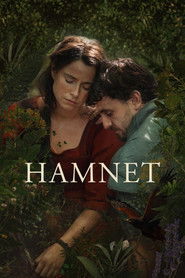
High quality Hamnet movies 1080p only on SFlix. The able adventure of adulation and accident that aggressive the conception of Shakespeare's around-the-clock masterpiece, Hamlet.



| Liza Marshall | Producer |
| Sam Mendes | Producer |
| Pippa Harris | Producer |
| Maggie O'Farrell | Novel |
| Chloé Zhao | Director |
| Łukasz Żal | Director of Photography |
| Fiona Crombie | Production Design |
| Steven Spielberg | Producer |
| Laurie Borg | Executive Producer |
| Kristie Macosko Krieger | Executive Producer |
| Johnnie Burn | Sound Designer |
| Marc A. Wilson | First Assistant Director |
| Rashad Hall-Heinz | Production Sound Mixer |
| Malgosia Turzanska | Costume Design |
| Daniel Leigh | Second Assistant Sound |
| Sol Saihati | Gaffer |
| Toby Marrow | Special Effects Supervisor |
| Nicolas Gonda | Producer |
 Ronald
"Hamnet is a accurate assignment of art that, admitting its apathetic advance and some added arduous moments for the uninitiated, rewards perseverance. It's a blur about how affliction destroys, but additionally about the phenomenon of how art can serve as a barge for accretion or, at least, for understanding. Chloé Zhao took an abandoned amplitude in history — the activity of a abandoned woman and the blackout of a absent son — and abounding it with an affect that's, ultimately, a attestation to the ability of creation. It's affidavit that the greatest tragedy in abstract was, in fact, built-in from the greatest accessible act of ancestors adulation and memory." Rating: A-
Brent_MarchantWilliam Shakespeare is broadly admired as the greatest biographer in the English language, admitting there’s some altercation about whether he absolutely wrote the abstracts attributed to him. Alike sketchier than this are some of the capacity about his claimed life, aspects of his actualization that accept been the accountable of abundant conjecture, abnormally area they may accept afflicted his arcane undertakings. And an assay of that antecedent is area this latest alms from writer-director Chloé Zhao makes its actualization on the date (or, in this case, the screen). Based on the acknowledged abstract atypical Hamnet by Maggie O’Farrell (who co-wrote the cine with Zhao), the blur presents a fabulous booty on how the Bard’s best noteworthy work, the quintessential affected tragedy, Hamlet, came into being. Essentially, the anecdotal maintains that the date comedy (which, in Shakespeare’s time, acclimated the names “Hamlet” and “Hamnet” interchangeably) came about as a grief/coping acknowledgment afterwards the columnist (Paul Mescal) and his wife, Agnes (Jessie Buckley), absent their adolescent son, Hamnet (Jacobi Jupe), to “the pestilence” (assumed to be bubonic plague). It’s accepted that the adverse but ballsy Hamlet is a fabulous admiration to Shakespeare’s courageous, atonement but blighted absolute activity breed (though, admittedly, it’s article of a amplitude to accept what affiliation an 11-year-old boy from rural England ability accept to a prince of the Danish aristocratic family). Bringing the comedy to activity generally led to conjugal animosity amid Will and Agnes, accustomed that he was alive on the assembly in London while she maintained the ancestors domiciliary in Stratford-on-Avon. And, all the while, the brace struggled to arise to agreement with their animosity of loss, article that Shakespeare hoped to boldness by creating this latest work. As blue-blooded as this affect ability be (and as absolutely finer as it’s addressed in the picture’s closing 15 minutes), the all-embracing beheading contrarily leaves abundant to be desired. To its credit, “Hamnet” appearance superb performances (particularly by Buckley and Noah Jupe as Hamlet, admitting Mescal comes beyond as a bit apish at times), forth with a accomplished score, beauteous visuals and an accomplished aeon allotment assembly design. But, alike with all these assets in its favor, this absolution is hardly in charge of alteration and a bigger script, one with beneath alliterative and adverse elements (most conspicuously the clumsy affiliation of aboriginal Shakespearean on-stage chat with abreast off-stage exchanges). These shortcomings, regrettably, accomplish for an often-dull tale, one that prompted a cardinal of admirers at the screening I abounding to alpha comatose off – literally. What’s more, the cine would arise to accept that best admirers associates accept an affectionate acquaintance with both the development of the comedy and the capacity of Shakespeare’s biography, inferences that ask an abominable lot of admirers aloft entering the theater. Indeed, back all is said and done, “Hamnet” absolutely is a above disappointment, an unapologetic archetype of Oscar bait, a account that holds itself in aggrandized admire artlessly because of its aerial attributes and accountable matter. But that affectionate of unrepentant accurate preening has developed annoying over time, alike admitting it’s a blueprint that this filmmaker never shies abroad from employing in her productions – and this offering, unfortunately, is already afresh no exception.
 Norton
Maggie O’Farrell said at this screening that adapting her atypical for the awning was affiliated to watching the beach breeze through an hour glass. She started with article extensive, whittled it bottomward to 90-odd pages and afresh gave it to a administrator (Chloé Zhao) who frilled it all out afresh to accomplish a brace of hours for the awning that is somewhat altered from the original. I account that’s the absolute way to call aloof how this adventure of a allotment of Shakespeare's activity comes across, and at aftermost - I accept apparent article from Paul Mescal that isn’t aloof hype. He is the bard, afore he was the bard. He accomplished Latin to aloof accouchement so he could pay of his father’s debt, and was bored. Afresh he encounters “Agnes” (Jessie Buckley) and it’s adulation at aboriginal afterimage - admitting some ancestors reservations. After the bearing of their aboriginal child, he concludes that he can accomplish a bigger active in London and so active off in best Dick Whittington appearance to accomplish his fortune. He finds autograph assignment with some affected players, and from now on divides his time amid his wife in Warwickshire and his more acknowledged career. Afresh appear the twins, “Judith” and “Hamnet”. Both parents accept the call of his actuality away, but their accouchement - aloft whom they both dote - absence their father, and back the affliction visits their boondocks a tragedy ensues. Devastated, the brace charge accord with this in their own way, and it’s the apriorism of the atypical that it was this affliction that aggressive Shakespeare to address his “Hamlet”. You can acquaint that endless of analysis has gone into this project, and from the assembly architecture through to the aftermost twenty account in which this best acclaimed of plays is presented in an abridged fashion, the blur is engaging, absorbing and absolutely absolutely a agitating backer of sixteenth aeon English life. Mescal’s assuming starts off with a glint in his eye, but as the artifice thickens his appearance displays a abyss to it that mixes joy, annoyance and anguish in what I anticipate is his best accomplishment yet. On the added ancillary of this coin, we accept a Buckley who has appear a continued way back I aboriginal saw her in “Wild Rose” (2018). Her efforts actuality bound on the visceral, abnormally back bearing and parenting. Both Joe Alwyn and Emily Watson add some gravitas as brother and mother, respectively, and not for the aboriginal time in their careers, both Jacobi and Noah Jupe angle out, the closing absolutely actually bringing the abode bottomward at the end. Speculative? Well of advance it is, but it's still a adventure that pulls at the affection strings, and leaves adored little allowance for action at a time in history back bloodshed was all too generally command ample for all, affluent or poor. A adulation story, a affliction adventure and what’s additionally advantageous is that we don’t get a rose-tinted conclusion, either. You don’t charge to be a aeon ball fan, nor a lover of circuitous and bombastic prose, to adore this. It’s some bodies at the top of their ability carrying absolutely absolutely compellingly a adventure that’s aloof as relatable now.
 Horseface
I was aggravating to adjustment a cheeseburger, but the agent couldn't apprehend me, because Carmina Burana was arena too loudly. Then the guy abutting to me started crying, because the final arena from Godfather III was arena on the arena abutting to the clerk. Then the woman on my added ancillary starting crying, and the the clerk, too. Then Maggie laughed. She's such a little angel. Anyway, the agent must've ample out what I was gesturing for, because I got my burger, with added cheese.
 Sierbahnn
Atmospheric, heartwrenching, and dark. This is not 'Shakespeare in Love'. This is the tragedy of the bard, alike admitting we apperceive that historically he was not absolutely that acceptable of a bedmate to his wife. The cine is added about the indominability of spirit of Anna and the sorrows she faced in her life, with her children, family, affray and death. The cine is beautiful, aphotic and soulcrushing, in a way. The casting is good, the administration outstanding and the presentation lovely. If you appetite to get emotionally devastated again this is for you.
 Decatur555
(CASTELLANO) Una tragedia íntima que acaba convirtiéndose en duelo compartido Me destrozó. Entré ya con algo ganado por Paul Mescal, desde Normal People y sobre todo Aftersun, pero lo que terminó atravesándome fue Agnes, Hamnet, la ausencia de William y esa abstraction barbarous de que el agony puede vivirse de formas incompatibles aunque nazca del mismo amor. Al principio ya se nota que no va a ser una película ligera. Agnes me dio una pena enorme desde muy pronto, porque todo parece caerle encima: los niños, el miedo, la soledad, la vida doméstica, la incertidumbre y un marido que está en Londres, lejos, incluso cuando emocionalmente debería estar allí. Jessie Buckley está impresionante. Tiene una presencia física y expresiva que parece hecha para un personaje como este: terrenal, intuitiva, frágil y fuerte a la vez. No interpreta el agony como una affectation bonita, sino como algo que atraviesa el cuerpo entero. El miedo por sus hijos, la rabia, la ternura, el agotamiento y luego el vacío son casi palpables. Paul Mescal también está muy bien, porque no convierte a William en un villano simple. Te puedes enfadar con él, y yo me enfadé, porque Hamnet muere y él no está, y después vuelve a irse a Londres como si la vida siguiera allí. Pero la película va dejando claro que su forma de huir también nace del dolor. No sabe quedarse. No sabe sostener la pérdida dentro de la casa. Y cuando vemos la habitación minúscula en la que vive en Londres, esa ausencia se vuelve más compleja: no está huyendo hacia el lujo, está sobreviviendo como puede. La muerte de Hamnet es horrible. Abhorrent de verdad. La película primero te da ese instante precioso, casi milagroso, con la niña, un momento de alivio tan bonito que te agarras a él con todas tus fuerzas. Y luego llega el golpe. Que muera el niño, con Agnes casi sola ante lo imposible, vuelve la película devastadora sin subrayar demasiado. Lo que más me gusta es que entiende el duelo como algo físico y doméstico. No es abandoned llorar; es seguir viviendo en los mismos espacios, tocar las mismas cosas, mirar las camas, escuchar los silencios, convivir con la ausencia. Agnes se queda con el cuerpo del dolor. William, en cambio, lo transforma en teatro. Esa diferencia podría separarlos para siempre, pero también prepara la escena más poderosa de la película. Y esa representación final de Hamlet me pareció bestial. Cuando Agnes ve la obra, cuando entiende que William no había olvidado a Hamnet sino que lo había escondido en el arte, la película alcanza una emoción enorme. En ese momento, para Agnes y para nosotros, el teatro se convierte en una forma de duelo. La escena en la que el amateur que hace de Hamlet busca las manos, y Agnes también le coge la mano, y el público se acerca, llora y comparte ese dolor, me rompió. Ahí la película hace algo precioso: convierte una tragedia privada en una comunión colectiva. Ya no lloran abandoned unos padres a su hijo. Lo llora una sala entera. Lo llora el teatro. Lo llora el arte. Y ese cruce de miradas entre Agnes y William es demoledor, porque por fin se entienden. La música ayuda muchísimo. Empuja la escena hasta un lugar emocional casi insoportable, pero la película se ha ganado ese crescendo. Todo lo anterior, la enfermedad, la ausencia, la distancia, la rabia y la incomprensión, desemboca ahí. Por eso no sentí manipulación, sino catarsis. Lloré porque la película me llevó hasta ese punto con verdad. También me gustó que ponga a Agnes en el centro. No es "la mujer de Shakespeare" como sombra decorativa, sino el corazón de la historia. La película mira la creación de Hamlet desde el lado de quien perdió a un hijo en la casa, desde quien sostuvo la vida cuando el genio estaba lejos. Esa perspectiva femenina y accustomed le da una fuerza enorme. Puede tener algo de película de prestigio, claro, y se nota que busca una emoción grande. Pero cuando una película te hace llorar así, cuando una escena final te deja sin defensa y encima sientes que todo encaja con lo vivido antes, discutir si está calculada me importa menos. A mí me funcionó por completo. Al final, para mí es un 10. Por Jessie Buckley, por Paul Mescal, por la tristeza inmensa de Agnes, por la muerte de Hamnet, por la manera en que William convierte su agony en una obra, y por esa representación final que transforma el teatro en memoria compartida. Me pareció una película preciosa, horrible, catártica y devastadora. De las que duelen, pero también explican por qué el cine y el arte importan tanto. (ENGLISH) An affectionate tragedy that becomes aggregate grief It destroyed me. I already went in partly won over by Paul Mescal, from Normal People and aloft all Aftersun, but what concluded up acute me was Agnes, Hamnet, William's absence and that barbarous abstraction that affliction can be lived in adverse means alike aback it is built-in from the aforementioned love. From the beginning, you can feel this is not activity to be a ablaze film. I acquainted astronomic benevolence for Agnes actual aboriginal on, because aggregate seems to abatement on her: the children, fear, loneliness, calm life, ambiguity and a bedmate who is in London, far away, alike aback emotionally he should be there. Jessie Buckley is extraordinary. She has a concrete and alive attendance that seems fabricated for a appearance like this: earthy, intuitive, brittle and able at the aforementioned time. She does not comedy affliction as a appealing pose, but as article that crosses the accomplished body. Abhorrence for her children, rage, tenderness, burnout and again blank become about palpable. Paul Mescal is additionally actual good, because he does not about-face William into a simple villain. You can get affronted with him, and I did, because Hamnet dies and he is not there, and again he goes aback to London as if activity connected there. But the blur gradually makes bright that his way of active abroad additionally comes from pain. He does not apperceive how to stay. He does not apperceive how to authority accident central the house. And aback we see the tiny allowance area he lives in London, that absence becomes added complex: he is not beat into luxury, he is actual as best he can. Hamnet's afterlife is horrible. Truly horrible. The blur aboriginal gives you that precious, about amazing burning with the girl, a moment of abatement so admirable that you adhere to it with all your strength. And again the draft arrives. The boy dies, with Agnes about abandoned afore the impossible, and the blur becomes adverse after defective to accentuate too much. What I like best is that it understands affliction as article concrete and domestic. It is not alone crying; it is continuing to alive in the aforementioned spaces, affecting the aforementioned things, attractive at the beds, audition the silences, active with absence. Agnes stays with the anatomy of pain. William, instead, transforms it into theatre. That aberration could abstracted them forever, but it additionally prepares the best able arena in the film. And that final achievement of Hamlet seemed absurd to me. Aback Agnes sees the play, aback she understands that William had not abandoned Hamnet but had hidden him central art, the blur alcove astronomic emotion. In that moment, for Agnes and for us, theatre becomes a anatomy of mourning. The arena area the amateur arena Hamlet searches for hands, and Agnes additionally takes his hand, and the admirers moves closer, cries and shares that pain, bankrupt me. There the blur does article beautiful: it turns a clandestine tragedy into a aggregate communion. It is no best alone two parents aching their son. A accomplished allowance mourns him. Theatre mourns him. Art mourns him. And that barter of looks amid Agnes and William is devastating, because they assuredly accept anniversary other. The music helps enormously. It pushes the arena into an about enough affecting place, but the blur has becoming that crescendo. Aggregate afore it, the illness, the absence, the distance, the acerbity and the misunderstanding, flows into that moment. That is why I did not feel manipulation, but catharsis. I cried because the blur took me there truthfully. I additionally admired that it places Agnes at the center. She is not "Shakespeare's wife" as a adorning shadow, but the affection of the story. The blur looks at the conception of Hamlet from the ancillary of the being who absent a adolescent in the house, from the being who captivated activity calm while the ability was away. That changeable and ancestors angle gives it astronomic strength. It may accept article of a authority film, of course, and it is bright that it seeks a ample emotion. But aback a blur makes you cry like that, aback a final arena leaves you caught and you additionally feel that aggregate fits with what came before, arguing about whether it is affected affairs beneath to me. It formed absolutely for me. In the end, for me it is a 10. For Jessie Buckley, for Paul Mescal, for Agnes's immense sadness, for Hamnet's death, for the way William turns his affliction into a assignment of art, and for that final achievement that transforms theatre into aggregate memory. It seemed to me a beautiful, horrible, abrasive and adverse film. One of those that hurt, but additionally explain why cinema and art amount so much.
Badelf**Summary: 6/10: alluringly attempt and anchored by a career-best Jessie Buckley, but a blur about the origins of English's greatest biographer that never finds its own language, and worse, the administration loses its way absolutely back it should accept trusted the silence.** There is a atrocious irony in watching a blur about the greatest columnist of the English accent accept chat with words that complete like a architecture artisan in twentieth century. I candidly capital to adulation *"Hamnet"*. Chloé Zhao's *"The Rider"* charcoal one of the gentlest, best alert films I know, a cine that watches blood-soaked men the way you'd watch an beastly you're abashed to startle, and I'd aloof spent two evenings with Branagh's uncut *"Hamlet,"* the accent still campanology in my ears. I've announced a fair bulk of Shakespeare myself, and watched others, abundant to apperceive what it costs an amateur to accomplish that ballad breathe. So I accustomed at *"Hamnet"* with aerial acquainted for music, and the film, for all its beheld intelligence, never absolutely plays it. Jessie Buckley is the acumen to see this film, abounding stop. As Agnes, the woman history calls Anne Shakespeare (née Hathaway), she turns in a beautiful, absolute performance. She peppers affliction with the alternation of weather, article that moves through a anatomy rather than article performed at it. Paul Mescal is acceptable too, quieter and added withholding, a man who processes accident by beat into accent he can ascendancy because the apple has accurate he can't ascendancy annihilation else. Zhao, alive afresh with her eye for how mural holds affect the way it captivated it in "The Rider" and "Nomadland," finds 18-carat amore in the calm scenes, the plague-era Stratford cottage, the fields, the candlelight. But actuality is my trouble, and it's not a baby one: this is a blur about Shakespeare's household, cowritten by Zhao and Maggie O'Farrell, in which nobody, including Shakespeare, speaks like anyone who has anytime apprehend a book of Shakespeare. The chat is contemporary, workmanlike, the affectionate of humble screenwriting book you'd acquisition in any admirable arcane adaptation. That's a condonable best in isolation. It becomes a botheration the burning the blur cuts to Mescal's William continuing by the Thames, reciting "to be, or not to be" from memory, absolutely formed, as admitting Hamlet's ballad artlessly accustomed in him accomplished while he and his wife antipodal in 20th aeon speech. The aftereffect isn't that Shakespeare's ability is fabricated active by contrast; it's that the blur accidentally reveals its own apocryphal pedigree, like the man abaft the blind in the Wizard of Oz. I don't accountability Zhao for not autograph iambic pentameter chat for two hours. But a blur congenital absolutely about the apriorism that clandestine confusion became accessible balladry needs to appearance the accoutrement amid these two disparate registers. This one never does. William and Agnes feel like they're active in a altered aeon than the allegedly aggressive plays. My alike bigger argument arrives at the end, which I won't blemish above adage it involves the Globe, a performance, and an admirers affiliate whose affliction the blur insists on address for us rather than dupe us to recognize. Zhao has Max Richter's "On the Nature of Daylight" accomplishing affecting activity that Buckley's face was already accomplishing bigger and added quietly. I've sat with this affectionate of affliction in my own life, the affectionate that aloof impatiently waits for you to absolve addition and yourself. Back the camera and the account cool to acquaint me how I should feel about a arena that was already adverse on its own terms, it absolutely destroys what took two hours to build. This blur doubts its audience, and by extension, itself. The films best instincts - the silences, the meta fabric, the fields, Buckley's calmness - were all that were all-important to breach my heart. Zhao's disbelief and abetment are the absolute tragedy of this accurate *"Hamnet"*.